
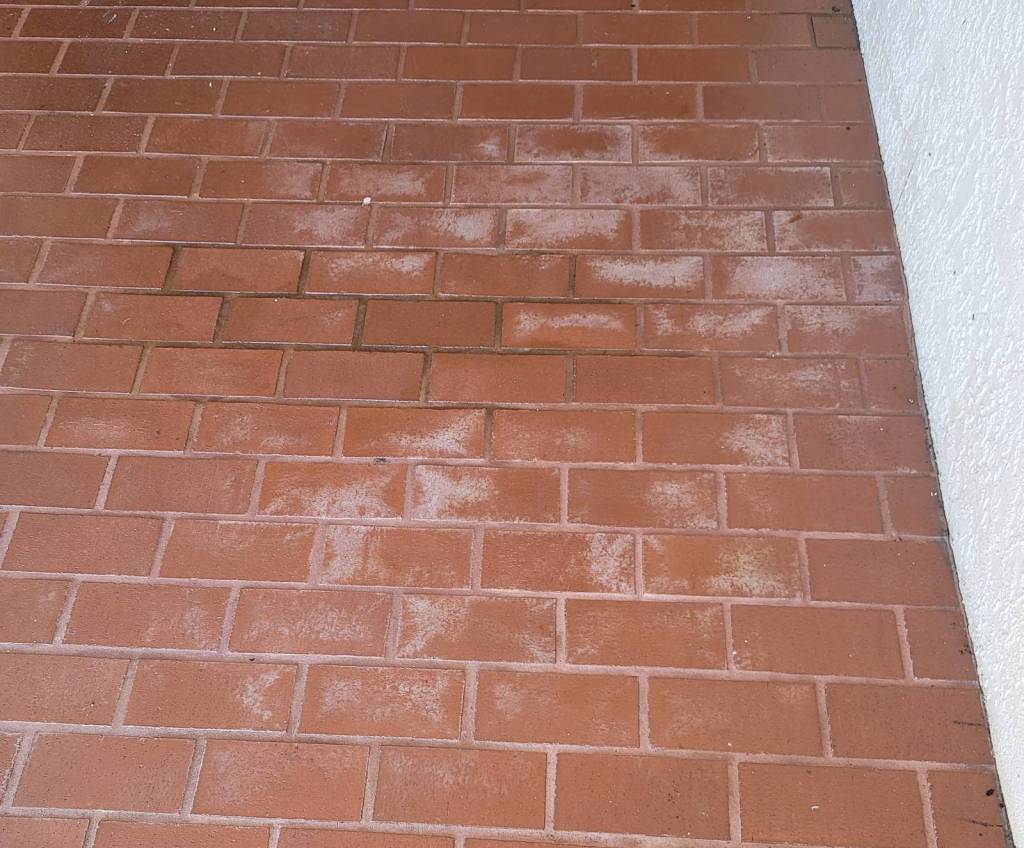
A customer calls two weeks after a seal job. The driveway looks cloudy, or a patio has started to peel in the traffic lanes. In Southwest Florida, those callbacks usually start with moisture, heat, or what was left on the surface before the sealer went down.
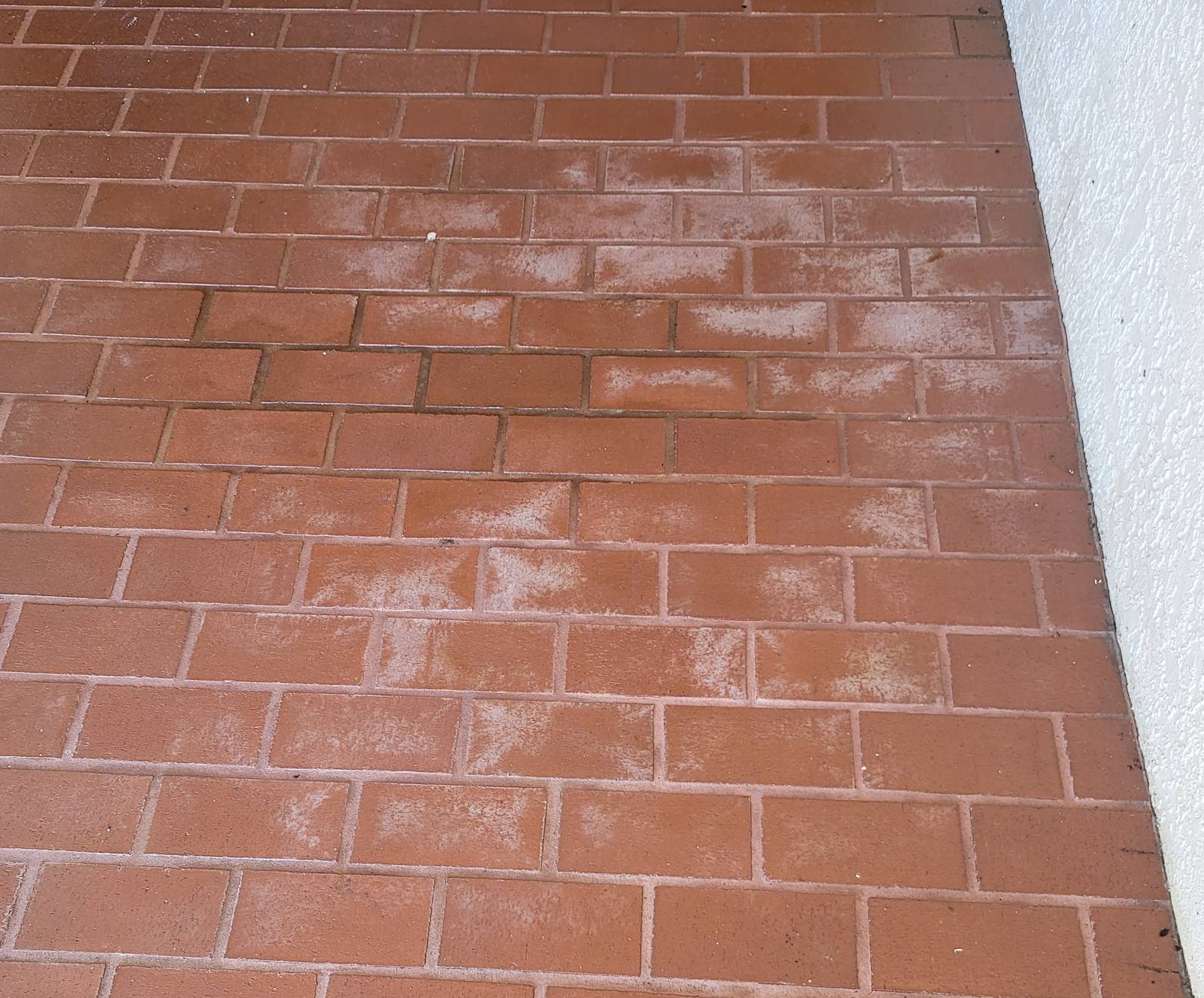
First, decide what kind of “white” you are looking at
Sealer blushing or hazing is a cloudy, whitish, or uneven look in the sealer itself. It often shows up after the job, in patches, and it is commonly tied to trapped moisture, flash drying, over-application, or an incompatible product.
Efflorescence is a white, chalky residue from salts inside the pavers. Water moves through the material, dissolves those salts, and leaves them on the surface as it evaporates. It is common where drainage is poor or pavers sit over a slab.
Calcium buildup is different. Hard water from irrigation, splash, or pool areas leaves minerals behind when it evaporates. All three can look similar from the driveway. Get close, and look at where the white is showing up. If you seal over efflorescence or leftover residue, you can lock that discoloration in.
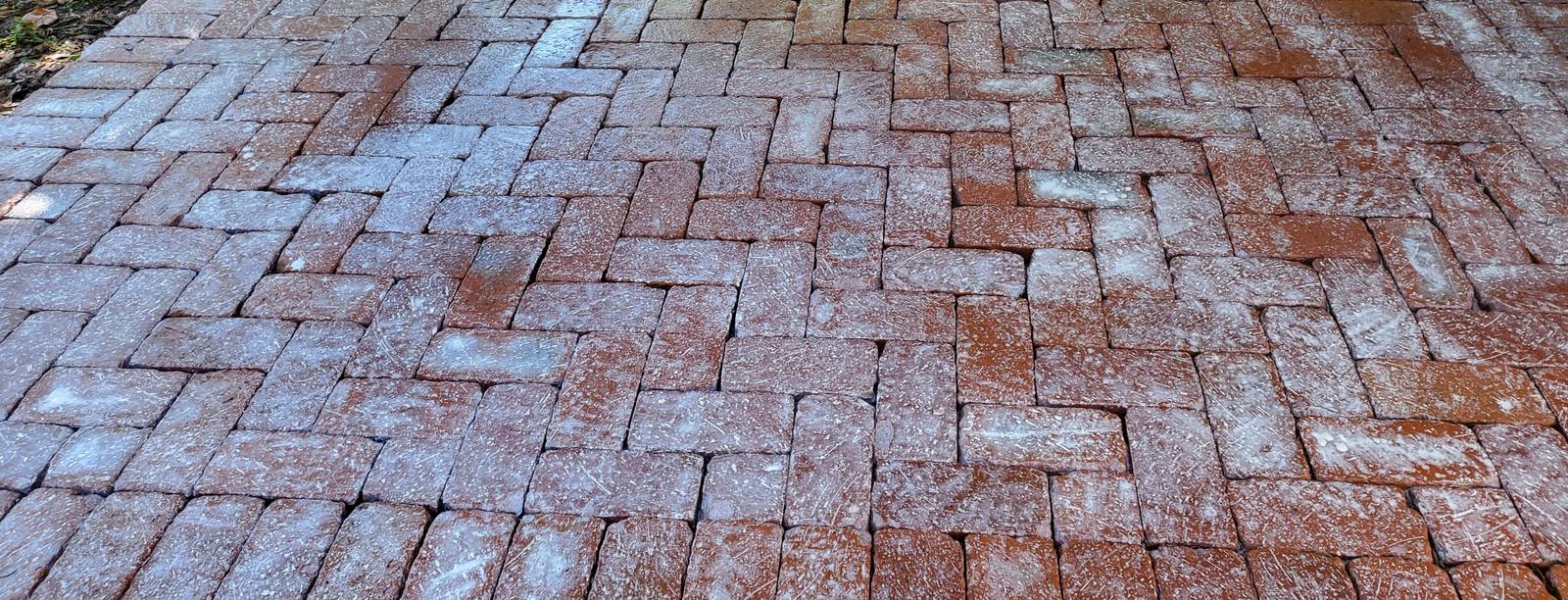
Why sealer turns white or peels
This climate is hard on coatings because the air, the ground, and the substrate hold moisture. If sealer goes down too soon after cleaning, after rain, or on new pavers that have not finished curing, the finish may haze, blush, or look dull and uneven. The top of the paver can look dry while the body of the material is still wet.
Heat can do the opposite kind of damage. In summer, sealer can flash dry—meaning it skins over too quickly on a hot surface and never has time to penetrate and bond. That can show up as haze, whitening, roller marks, bubbling, or streaking. Dark pavers in direct sun can be much hotter than the air temperature.
Over-application causes problems too. Sealing every year, or putting down a heavier coat than the surface can take, can lead to haze, uneven sheen, peeling, or a cloudy look from product buildup. More sealer is not more protection. Layering a water-based sealer over an unknown solvent-based film, or the other way around, can also turn cloudy. If you cannot identify what is already on the surface, do not guess.
Peeling and flaking are more common with film-forming, or topical, sealers. Those products sit on the surface. When they lose their bond—because of moisture, heat, poor prep, or a failing coat underneath—they can lift. A penetrating sealer soaks into the pores of the material. On a clean, dry, compatible surface, it is less likely to peel like a coating.
A new sealer can only hold as well as what is under it. If the old film is already loose, shiny in some spots and bare in others, or visibly flaking, a fresh coat will not save it. Strip, then start clean. Dirt, algae, leftover sand, oil, a damp surface, or new pavers that have not finished curing will also keep sealer from bonding.
How to prevent it on the next job
Prep is the job. Sealing is the last step.
Clean thoroughly and rinse completely. Anything left on the surface—dirt, mildew, oil, old residue, or efflorescence—can be sealed in. If you see white chalkiness before you seal, treat it and let the surface dry.
Give the surface time to dry after cleaning or rain. In this humidity, that often means cleaning one day and sealing the next. Even when the top looks dry, moisture can still be in the pavers or the setting bed, especially on thin-set work over a slab.
Watch the heat. If the surface is too hot, wait. Start early, work with shade or cloud cover, or come back the next morning. Choose a sealer that fits the surface and the moisture conditions. Breathable penetrating products, such as SilaCast BES, are often a better fit when vapor drive is a concern, because they allow moisture vapor to escape instead of trapping it. A high-shine acrylic or a hybrid with a surface layer can be the right look, but only on a compatible, prepared surface.
Skip polymeric sand if you plan to seal. It can trap moisture in the joints and contribute to haze or mold. The Interlocking Concrete Pavement Institute points to joint sands that meet ASTM C33 or ASTM C144 standards instead.
Do not reseal on a calendar if the existing sealer is still doing its job. A well-prepared application here often lasts two to three years. If water still beads and the film is sound, clean and maintain it.
When the damage is already done
If the white residue is mineral or salt, the sealer may still be intact. The surface may need cleaning, better drainage, or irrigation adjustments more than it needs another coat.
If the sealer itself is cloudy, peeling, or uneven, a recoat will rarely fix it. Plan to remove the failed material—usually with a stripper such as StripaCast when dealing with an old film-forming coating—then let the surface dry and reseal with a compatible Deco product. Diagnose the problem carefully before bidding the repair.
FAQ
Will a breathable sealer stop efflorescence forever?
No. Efflorescence is a moisture-and-salt issue. A breathable sealer can help manage it by not trapping vapor, but if water keeps moving through the pavers, it can come back. Be honest with the customer about that.
Can I just roll another coat over a hazy job?
Usually not. Another coat often locks the problem in. Find the cause, and strip if the existing film has failed.
How can I tell sealer blushing from mineral residue?
Blushing is usually in the sealer itself and often looks cloudy or uneven after a recent application. Efflorescence and calcium deposits are chalky residues on the surface and may appear even when the sealer is still sound. Do not seal over either until you know what it is.
Have a question this post did not cover? Send it in—it may become a future article.


Leave a Reply