
The most expensive words on a reseal bid are “it should be fine to go over.”
Sometimes that is true. A penetrating sealer that is still sound can often be cleaned and recoated. A failing topical film cannot. The difference is on the surface, but only if it is read carefully before the quote goes out.
Know what you are looking at: topical vs. penetrating
Topical sealers, also called film-forming sealers, create a layer on top of the pavers or concrete. They can leave a matte or glossy look. Over time, especially in traffic lanes and in the Florida sun, that film can wear, peel, flake, or turn uneven.
Penetrating sealers soak into the pores of the material and bond within the substrate. They protect without building a heavy coating on top. When they wear, they tend to fade rather than peel, and many can be recoated after a thorough cleaning if the surface is compatible and in good condition.
Hybrid products sit in the middle. Shine-a-Cast, for example, penetrates and also leaves a semi-protective layer on the surface. That extra hold and higher shine can be useful, but a hybrid should not be treated like a purely penetrating recoat forever. If a surface layer builds, wears unevenly, or fails, it may need to be removed. If it is unclear what was applied last time, do not assume the surface will accept the next product.
How to read the old sealer on site
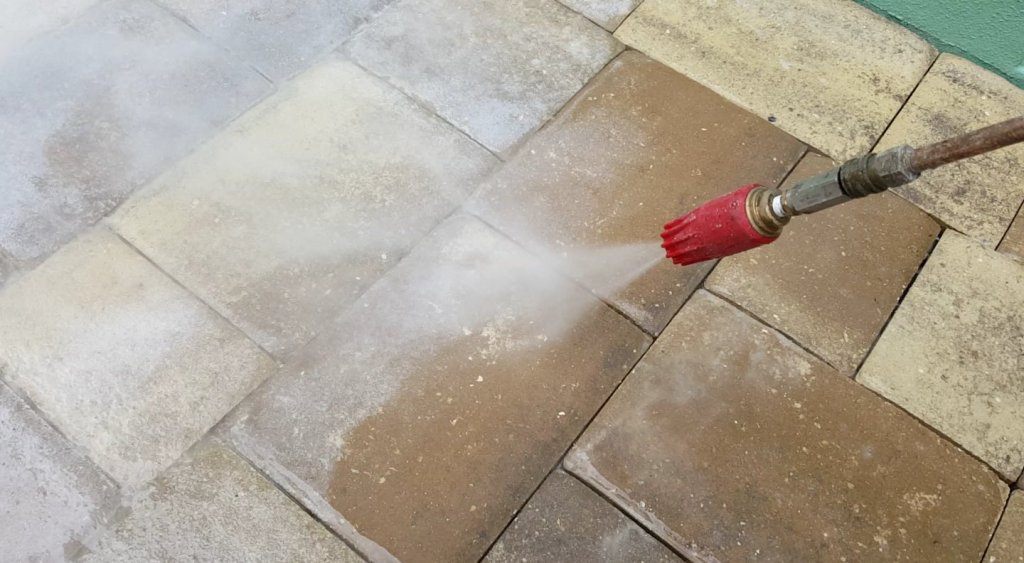
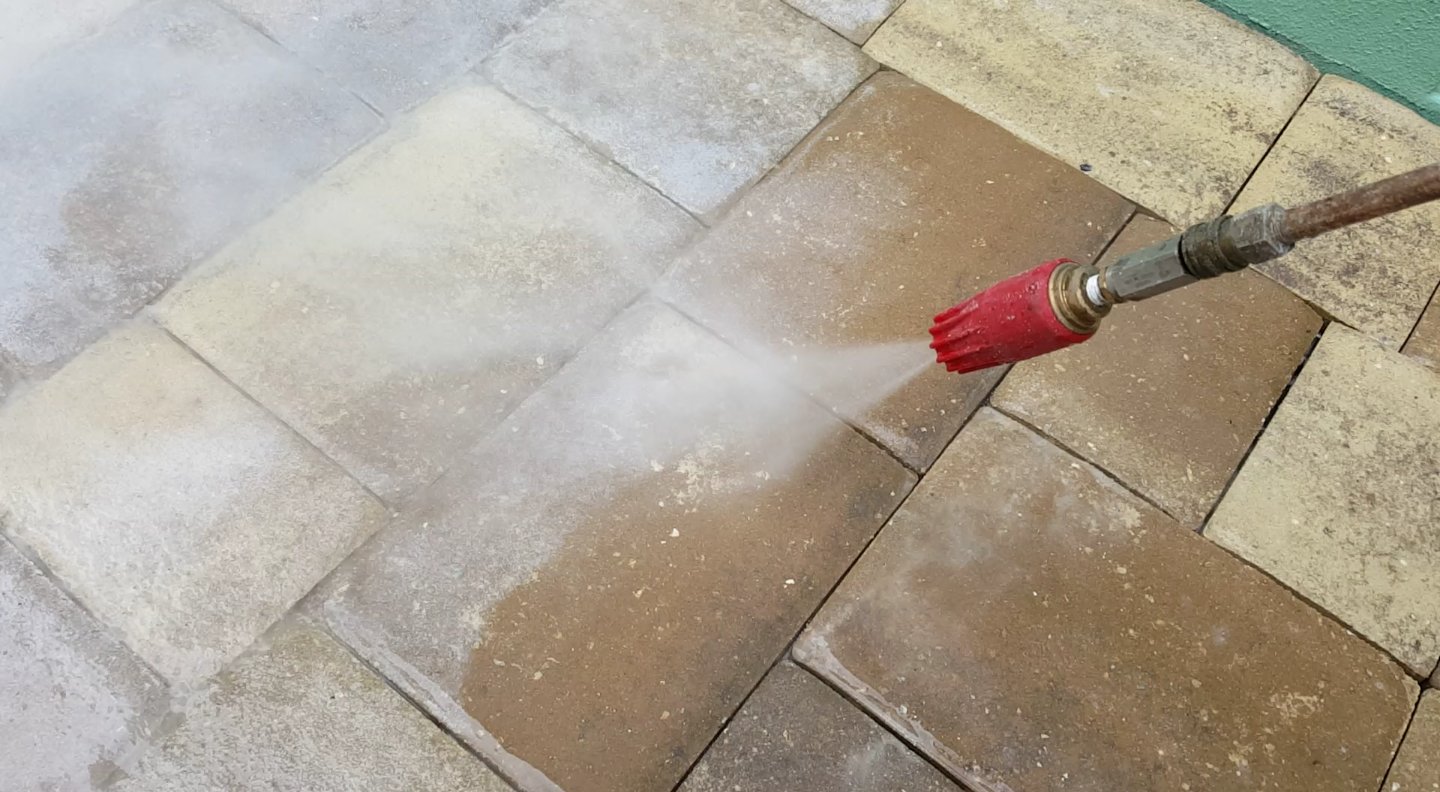
Walk the whole surface, not just the easy center of the patio. Peel, flake, or a film that is shiny in some spots and bare in others are signs of a topical coating that is already failing. A new coat will only be as strong as the film underneath. Haze or a whitish cast in the sealer can point to trapped moisture, flash drying, or an incompatible layer. Recoating a cloudy film usually locks the problem in.
Do a water test in a few areas, including traffic lanes and a lower-wear section. If water still beads, the existing sealer may still be working. If water soaks in quickly and evenly, the sealer may be worn and the surface may be ready for a new penetrating application after a proper clean and dry. If the reaction is patchy, leftover film and raw paver may be sitting side by side. That mixed surface is a warning, not a green light.
Ask what was used, when it was done, and whether anyone has sealed over it since. A solvent-based film and a water-based sealer can react poorly if they are layered together. If nobody can name the old product, treat that as a reason to test, not a reason to roll. If joint sand is gone, plan to replace it with a clean sand that meets ASTM C33 or ASTM C144 standards—not polymeric sand—before sealing. If an old film is flaking into the joints, strip first. When the surface will not give a clear answer, check the technical data sheet and do a small test area before bidding a full reseal.
When stripping is the right call
Strip when a previous sealer will compromise the new job. Remove a topical sealer that is peeling, flaking, or uneven. If the work is switching from a topical coating to a penetrating sealer such as Deco 20 Clear or SilaCast BES, the old film has to come off so the new product can reach the substrate. The same is true if the old product is incompatible, or if the sealer is already white, hazy, or blushing. A new coat is not a repair in those cases.
StripaCast is the Deco product built for this step. It is a non-hazardous, spray-applied liquid stripper designed to help remove old, worn-out film-forming sealers from concrete pavers, tiles, and other cementitious surfaces. It is intended to be used before SilaCast BES, Deco 20 Clear, or TravaCast. Follow the technical data sheet for dwell time, application, and rinse. Budget an extra day for the strip itself, plus drying, before the new sealer goes down, and tell the customer that up front.
When you can skip the strip
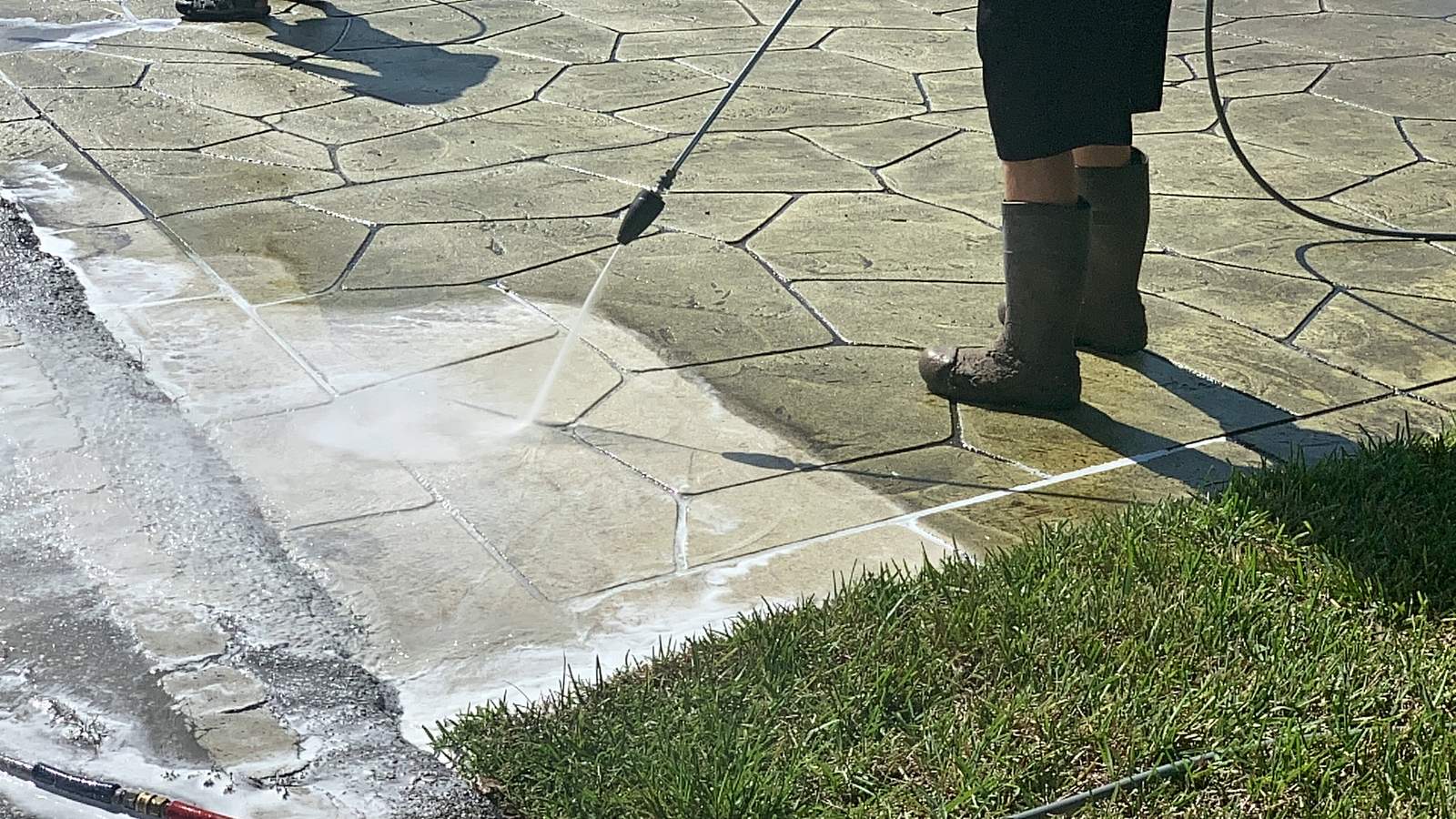
Not every reseal needs a strip. If a penetrating sealer was used previously and the surface is still in good condition, a thorough cleaning may be enough. Many penetrating systems, including SilaCast BES, are designed so they can be resealed as they wear without stripping first. If the next coat is a compatible sealer that is still adhering well, clean the surface and recoat according to the data sheet.
If water still beads and the film is uniform, it may not even be time to reseal. In this climate, a well-prepared job often lasts two to three years, with driveways wearing faster than a patio or pool deck. Sealing every year can create buildup, haze, or peeling.
Bid what you see, not what is convenient
It can be tempting to price a clean-and-recoat because that is the number the customer wants to hear. If the film is failing, that number will not hold.
Walk the surface and name what you see. If the job needs a strip, or another dry day after the strip, include that in the bid.
FAQ
Does every shiny surface need to be stripped?
No. Shine can come from a sound topical or hybrid sealer that is still adhering, or from a product chosen for that look, such as TravaCast. The question is condition and compatibility, not sheen alone.
Can I spot-strip just the peeling areas?
Mixed surfaces are hard to blend. If the coating is breaking down, a full strip is usually the cleaner reset.
How much time should a strip add to the job?
Plan an extra day for the strip itself, plus drying, before the new sealer goes down. Make that part of the schedule when the job is bid, not after work has already started.
Have an old-coating question this post did not cover? Send it in—it may become a future article.


Leave a Reply